How It Actually Started
Its founder, Paris-based fashion commentator Elias Medini, known as Lyas, experienced what has become routine across the industry. Despite being deeply immersed in fashion history, critique, and design analysis, he was excluded from a major show.
This was not unusual. It was structural.
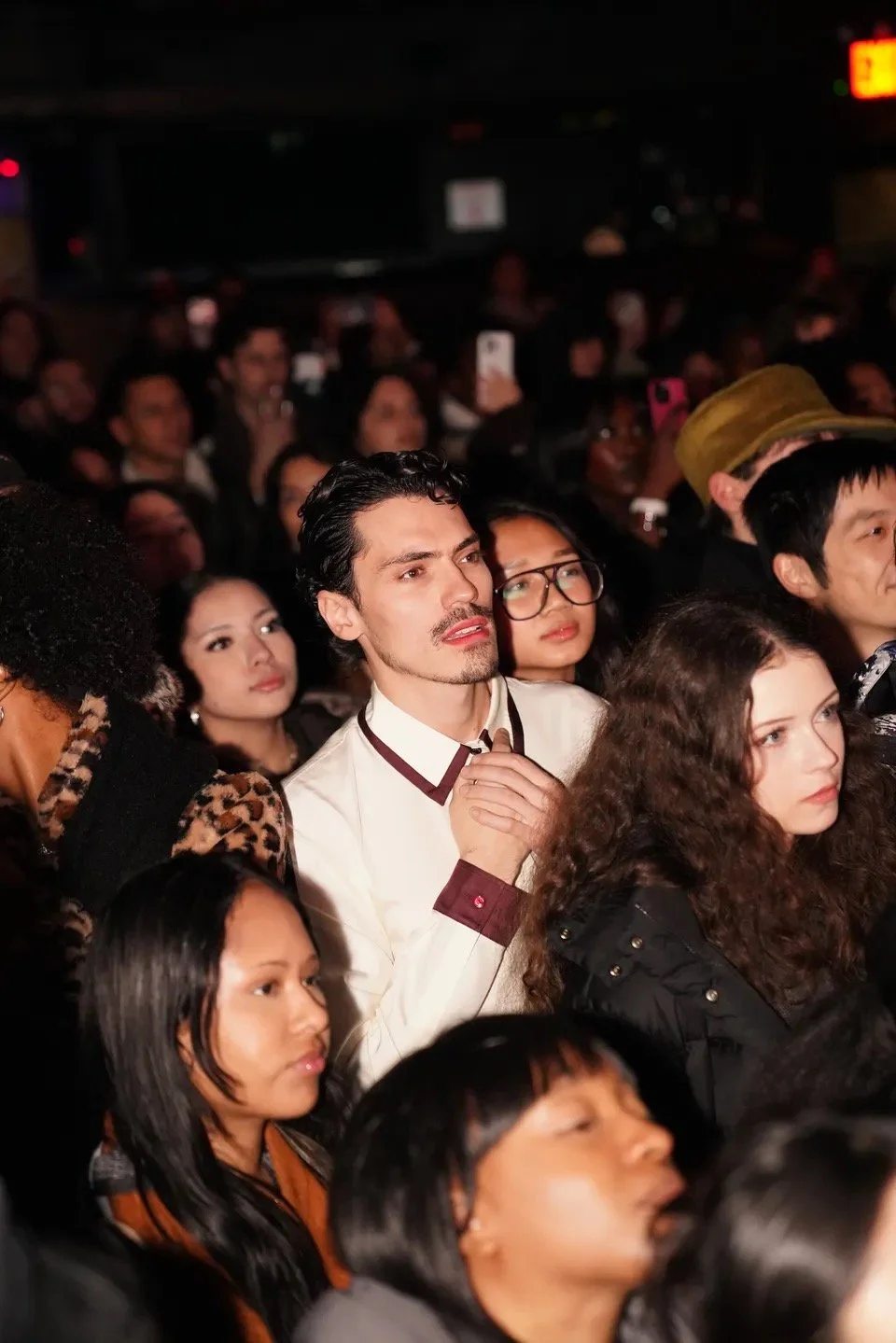
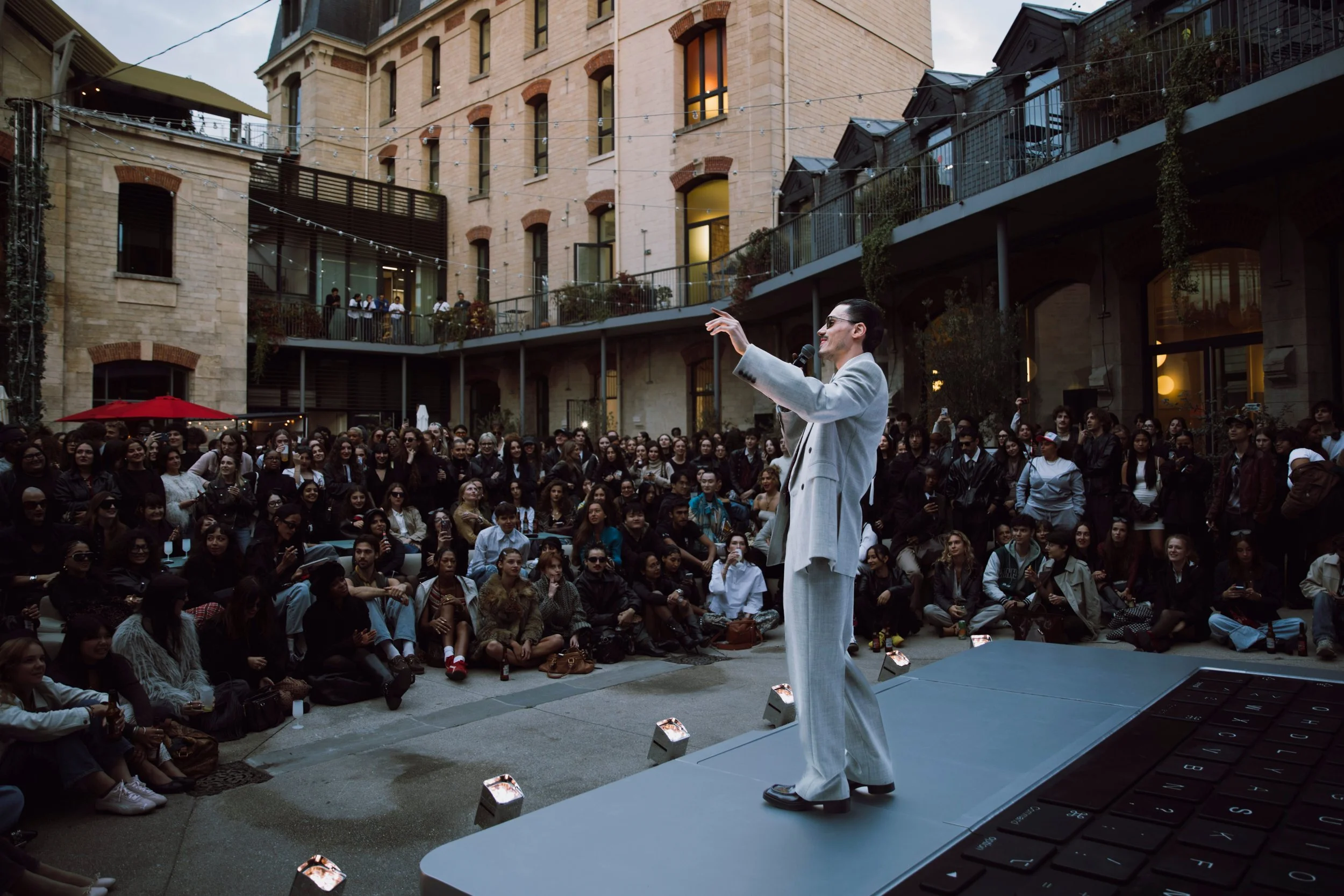
Instead of quietly accepting the contradiction, Lyas made it visible. He took the public livestream and projected it in a bar. No list. No gatekeeping. Anyone who cared about fashion could come.
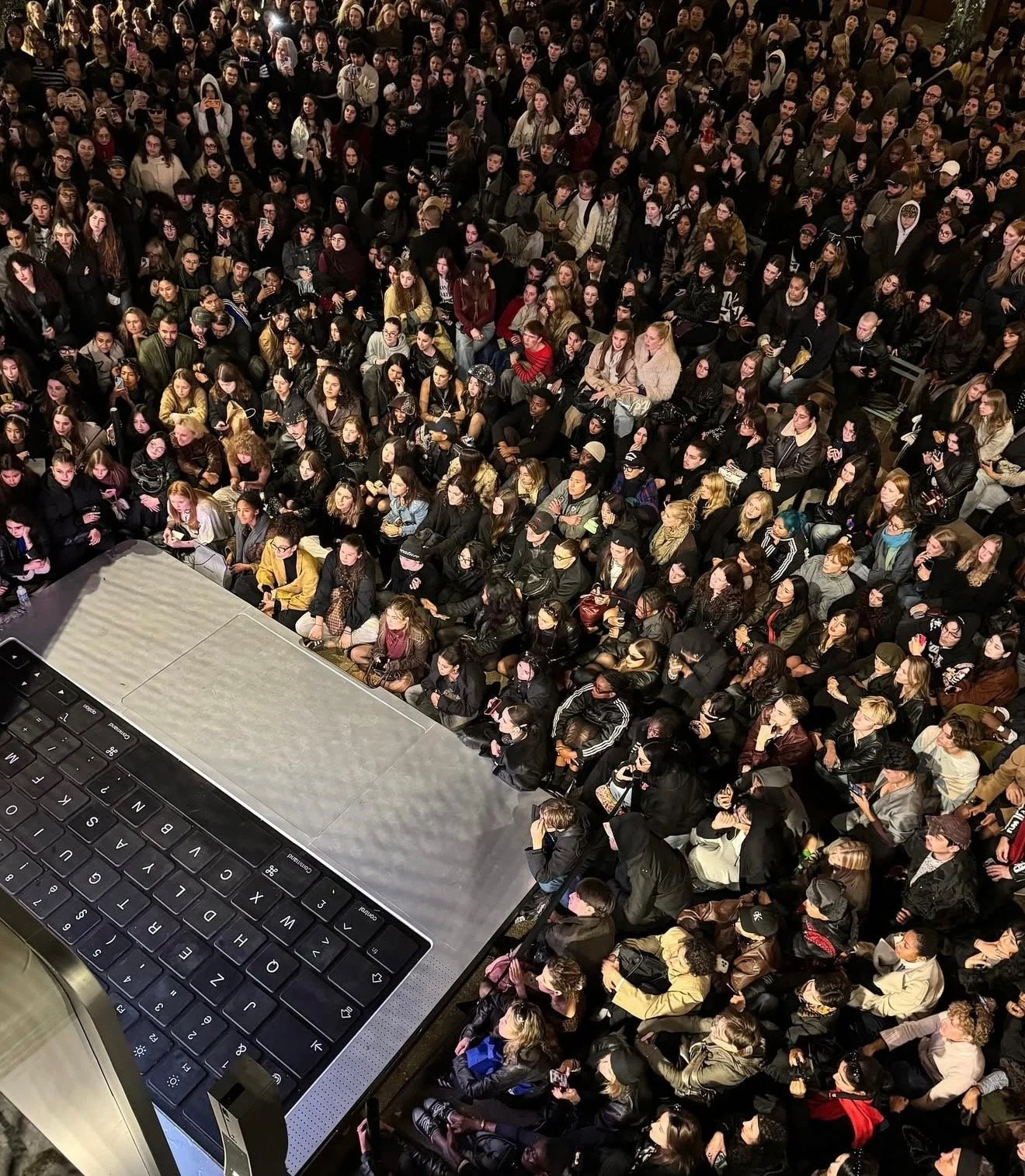
Hundreds did.
What was revealed that night was not anger, but hunger. People were not chasing prestige. They were chasing experience. They wanted fashion to feel social again. Alive again.
La Watch Party was born not from rebellion, but from necessity.
The System It Corrects
Modern fashion weeks have become paradoxical. Shows are broadcast globally, yet physically restricted more than ever. The industry performs openness while practicing exclusion.
Worse, the criteria for inclusion have shifted toward pure metrics.
A person with no understanding of design, history, or construction can now occupy a front-row seat if their reach is large enough. Meanwhile, the people who actually build fashion’s cultural infrastructure watch from phones.
This inversion has turned fashion week into a spectacle of misallocated authority.
The people closest to the clothes are often the least equipped to interpret them.
La Watch Party as Cultural Infrastructure
La Watch Party now operates alongside fashion weeks in Paris, Milan, and London as an unofficial but increasingly essential institution.
It is not anti-fashion. It is post-fantasy.
It accepts that access is broken and builds a parallel system instead.
Large screens replace runways. Open spaces replace guest lists. Conversation replaces silence.
People gather to watch the same shows as the official audience, but with something missing inside most venues: engagement.
They pause the stream. Rewind looks. Debate references. Argue about casting and construction. Fashion is processed collectively, not captured individually.
It restores fashion week’s original function as a site of interpretation.
The Intelligence Has Migrated
What La Watch Party exposes is uncomfortable for the industry.
The sharpest fashion thinking is no longer guaranteed to be inside the shows.
It is often happening outside them.
In these rooms are stylists, assistants, vintage dealers, young designers, photographers, creative directors, and students. The people who actually build fashion culture before it becomes visible.
They do not attend to extract content. They attend to extract meaning.
This is where fashion is being understood in real time.
When the Industry Follows the Movement
The most telling development is that brands have begun to adapt.
Design houses like Dsquared2 now give away show tickets directly to La Watch Party attendees.
This is not charity. It is recognition.
The brands understand what is happening before institutions do. Cultural energy has shifted. The audience shaping fashion’s future is no longer reliably seated inside official venues.
It is gathering elsewhere.
When brands redirect access toward La Watch Party crowds, they acknowledge a quiet truth.
This is where the culture is.
Where the Best Dressed Actually Are
Anyone who has spent time at fashion week knows the unspoken rule.
The most interesting style is rarely inside the show.
It is outside the gates.
Hundreds of young creatives gather each season wearing archive, emerging designers, reworked vintage, personal uniforms. They dress not for brands, but for each other.
They are not chasing validation. They are expressing identity.
This has always been true. La Watch Party simply formalizes it.
The best dressed no longer orbit official front rows.
They orbit each other.
A Structural Shift, Not a Trend
La Watch Party is not a novelty format. It is a structural response to institutional failure.
When gatekeeping becomes detached from knowledge, culture reorganizes itself.
This is how all cultural movements form.
Parallel systems emerge when official ones lose credibility.
What It Ultimately Reveals
Fashion has not lost its audience.
It has lost its map.
The industry continues to measure relevance in numbers, while culture measures it in understanding.
La Watch Party proves that fashion authority no longer lives automatically inside controlled spaces.
It lives wherever people care enough to argue about clothes.
And increasingly, that place is not the front row.
It is the room next door.