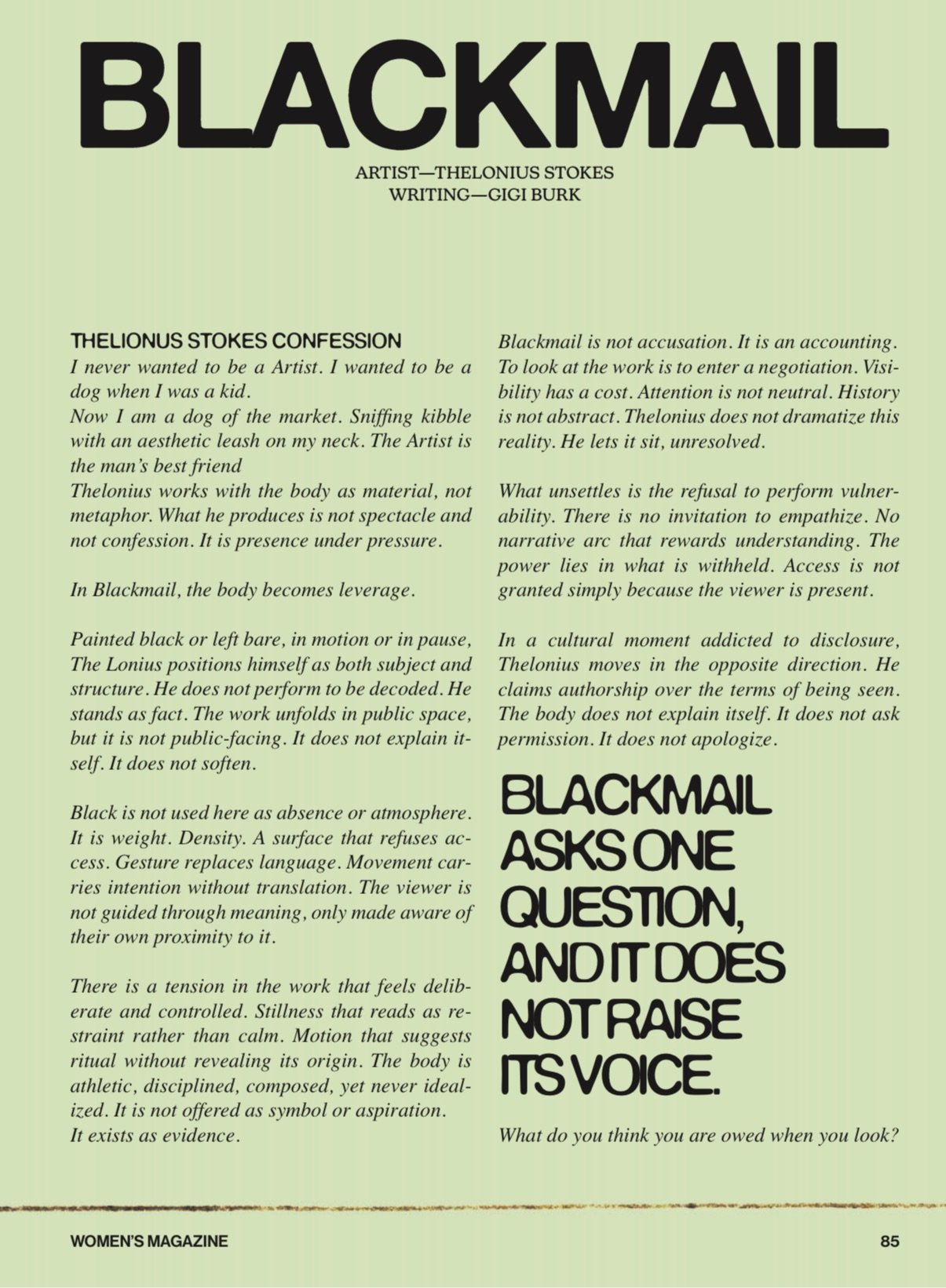
Thelonious: The Artist Who Turned His Life Into a Living Performance
BY GIGI BURK
Most people discover Thelonious now
now not through a gallery or a museum, but through Instagram.
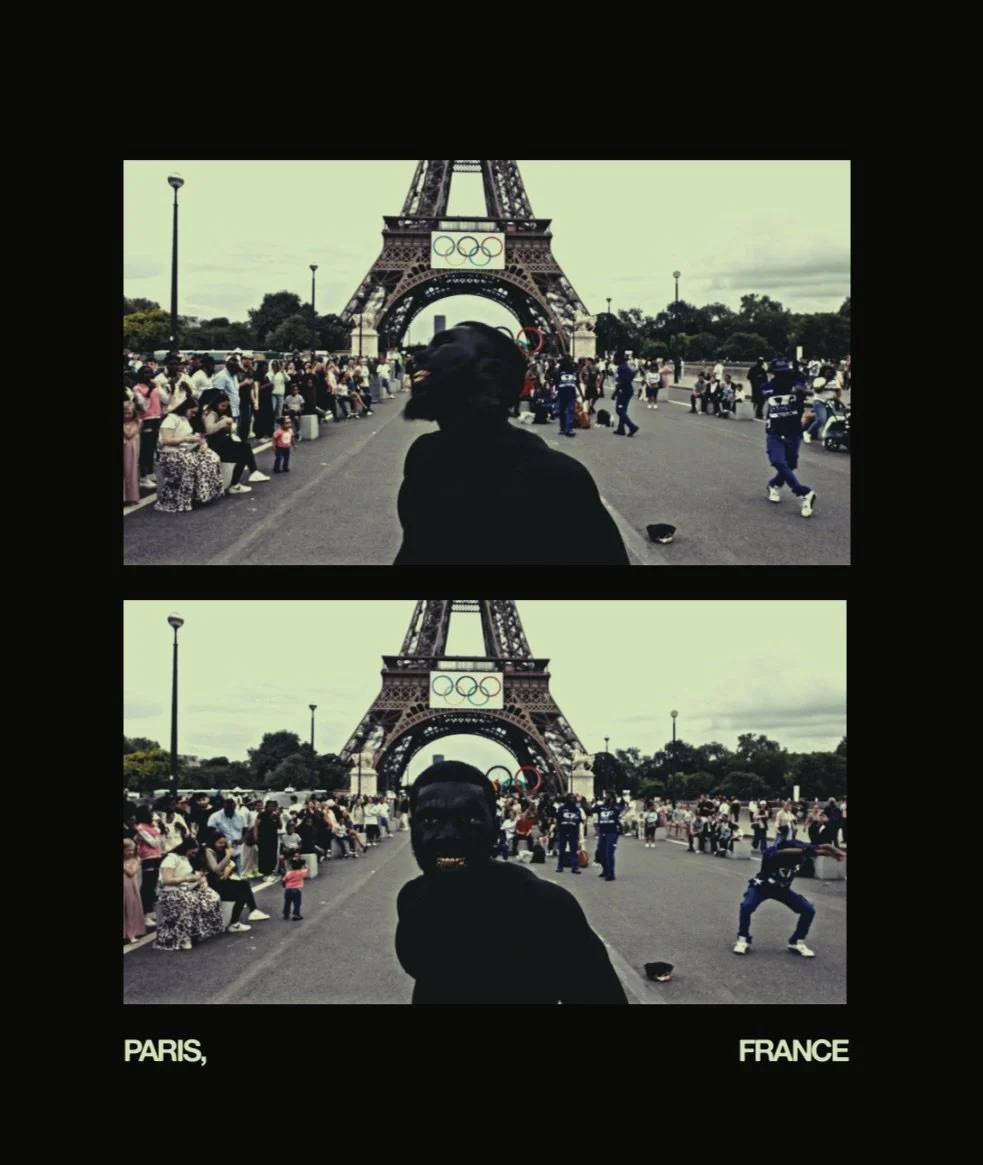
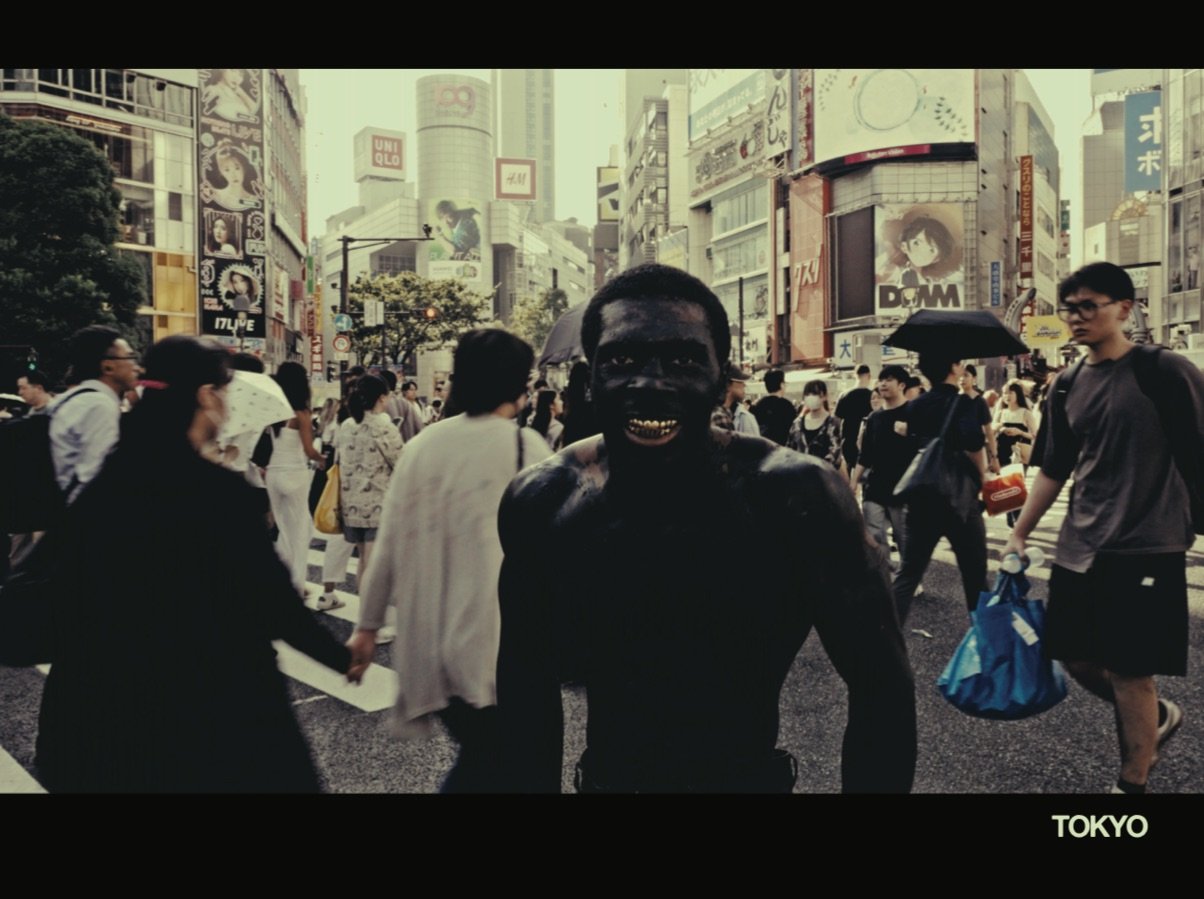
His videos interrupt the scroll almost accidentally: a man painting in the street, filming himself mid-performance in European cities, composing images, sound, and movement in public space as if the world itself were his studio. The work doesn’t announce itself. It simply unfolds, already in motion.
That is how I found him too, not through an exhibition catalogue, but through my phone.
What immediately distinguishes Thelonious from most artists online is that his account does not feel like promotion. It feels like access. You are not shown a finished product arranged for consumption. You are brought inside a process that is already happening. Painting, performance, design, and music are not separate disciplines in his world, but interconnected parts of a single language. One bleeds into the next. Watching his feed feels less like viewing a portfolio and more like stepping into someone else’s internal rhythm.
He is not documenting a practice. He is living inside it.
I messaged him impulsively, without a pitch or a plan, simply out of curiosity. We were on a call soon after, which in itself felt unusual in an era where artists are often buffered by distance and intermediaries. Thelonious was direct, thoughtful, and open, speaking about his work not as content but as necessity. At one point I nearly flew to Florence on instinct alone. He teaches art to children there and keeps a studio in the city, and I wanted to understand the environment shaping this fluid, mobile practice. I couldn’t make the trip, so instead I included his self-portraits in Confessional: Blackmail, which felt like the closest form of collaboration possible from a distance.
He explained to me that the public performances began almost accidentally. One day he started recording himself working in public space, painting, moving, constructing images in real environments, not as spectacle but as experiment. People didn’t just watch in passing. They stopped. They stayed. What began as documentation slowly became structure. The city entered the work, not as backdrop but as collaborator.
Unlike most artists, Thelonious does not separate process from presentation. Creation is not hidden. It is central. His paintings do not exist alone, but as part of a larger system that includes movement, sound, and place. Each medium informs the others. This is not multidisciplinary branding. It is conceptual continuity.
In an era when creative feeds are engineered for speed, clarity, and marketability, his work resists explanation. It does not flatten itself for easy consumption. Ambiguity is preserved. That restraint is rare.
His online presence functions less like a gallery wall and more like a narrative in progress. You do not follow Thelonious to collect images. You follow him to witness something developing. Becoming, rather than arriving.
This is why his audience feels different from that of most social-media artists. People are not there for decoration. They are there for immersion. Watching him work feels closer to entering a world than viewing a product.
Thelonious represents a new type of contemporary artist, one who is not gallery-first and not platform-first, but world-first. He treats the internet as a living exhibition space rather than a marketing tool. Where most creators adapt themselves to platforms, he adapts platforms to his vision.
In a culture obsessed with finished outcomes, he restores attention to process, not as performance for attention, but as a way of living.
Some artists make work. Others construct worlds.
Thelonious is doing the second.
And we are watching it happen in real time.